
Kapelle Strock:
R U S S I A N
T A N G O
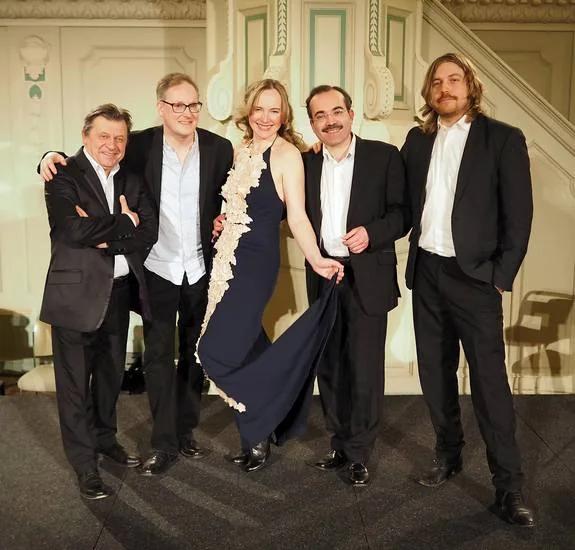
A thrilling musical journey into a world of love and lovelessness, suppressed longing and volcanic passion. Exquisite tango songs by Oskar Strock, Eddie Rosner, Alexander Wertinski, Jerzy Petersburski, Isaak Dunajewski and other composers who formed and shaped the Russian tango.
The true treasure stays hidden for a long time. These tango songs, which speak above all of heartache, are the crucial link between the pre-war Polish tango culture and the Finnish tango scene of today; steeped in various influences - Argentine and Jewish, cabaret and classical - they may well be the finest, still insufficiently appreciated examples of European tango music.
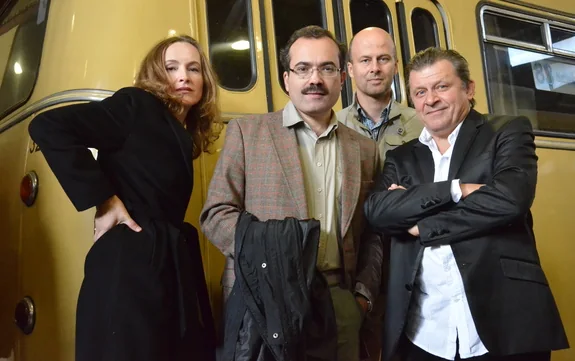
taz am Wochenende, 8/9 August 2015, Culture, p. 16:
Russian Tango
Shipwreck with Music
[...] The [...] insistent rhythm is further intensified by mournful singing and the soft tones of an accordion. Ever bolder, the tango sways in the face of the looming catastrophe. [...] All this resonates in "Utomljonnyje solnzem", a sombre piece of music held in a relentless rhythm, written in a minor key like many Russian tango pieces. "From a musicological point of view, Petersburski's stylistic devices are downright demonic," explains tango expert Dmitri Dragilew [...]. "It is about love and parting. This is no ordinary love song. It sounds truly monstrous." With the social context in mind, the music becomes a swan song about wanting the good and failing at it - it is about the love of high ideals that are betrayed. Society is shipwrecked [...]. The author of the book "Labyrinths of Russian Tango" also composes himself. Dragilew grew up in Soviet-era Riga before 1989 and has known this music since childhood. [...]
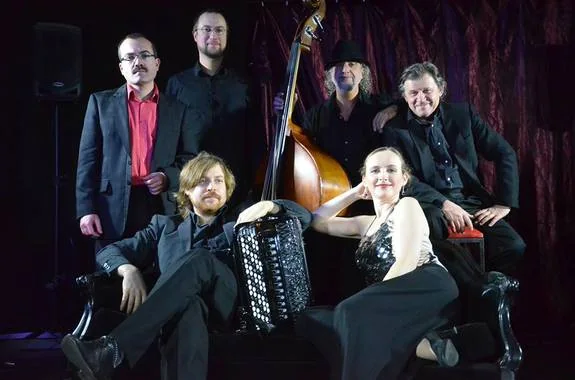
Tango made its breakthrough in a time of violent political upheaval across Eastern Europe. Shortly before the Second World War, tango experienced another boom in Russia. […] [...] Polish composers - many of Jewish origin - emigrated to the Soviet Union, fleeing the advance of the Wehrmacht. Among them are musicians like Eddie Rosner and Jerzy Petersburski. They inspired many of their Russian colleagues to engage more deeply with tango. In 1940 Latvia was annexed to the Soviet Union, and so the […] composer Oskar Strock, too, found himself in the Soviet Union.
That year also saw the Winter War between Finland and Russia. Through it the Finns, too, came into contact with Russian popular music. With great consequences: today tango enjoys the status of national music in Finland and in Argentina - not so in Russia, where it is largely forgotten.
Composers like Strock, Pjotr Leschtschenko, Eddie Rosner and Wadim Kosin would suffer harsh fates. [...] Leschtschenko had worked closely with Oskar Strock and sang in Strock's most beautiful tango compositions [...] The trumpeter Eddie Rosner fled Poland and only found fame in the Soviet Union. But his success lasted just a few years. Then the Soviet leadership launched a heavily antisemitic campaign against "cosmopolitanism" [...] In Siberia Rosner managed to found a music group. He played concerts for prisoners and guards. Rosner survived the Gulag; he was released in 1954, returned to Moscow and started over with a new orchestra […]. Oskar Strock's idea of tango, too, did not match what the Soviet authorities allowed. For Dragilew, Strock is the undisputed king of Russian tango. "He became a victim of the Cold War - back then everything Western was under suspicion. [...]. His tangos were very popular in the West as well - he celebrated his first successes in Berlin. Until 1932 he recorded records for German labels. [...] Only shortly before his death in the early 1970s was he rehabilitated [...]. It did not do much for his popularity. Strock's talent and work never received the lasting recognition they deserve."
Even in Russia today the South American tango is more widespread than the home-grown variety, but Dragilew senses growing interest in the old tradition: "I see it, among other things, in the way musicians, historians and musicologists are showing interest." […] Dmitri Dragilew is trying [...] to wrest the Russian tango from oblivion.
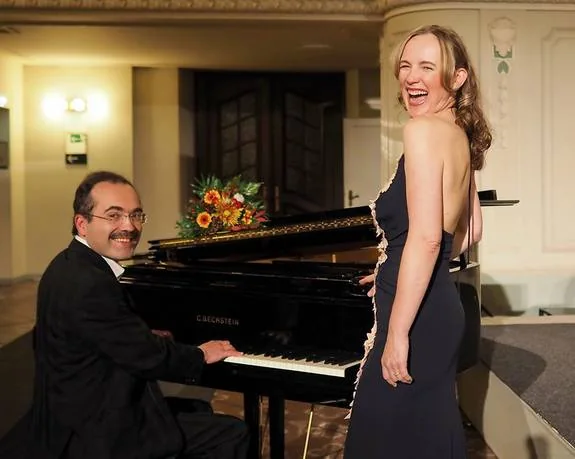
As soon as you click HERE ↓ on this record
or on the pictures and banners, you will get to the music ®©.
Contact: strock.rosner.society@gmail.com or
strock-rosner-society@radioakzent.de
Project assistance: Natalia Tarasova, 0176 73858222, tarasova.natasha@gmail.com
WORKING WITH THIS THEME EVEN MORE COMPREHENSIVELY IS
THE OSKAR STROCK & EDDIE ROSNER ORCHESTRA
This project of the association was conceived in the spirit of its statutes, to cultivate the culture of remembrance of Eddie Rosner and Oskar Strock, two musicians of the century who had to flee Nazi Germany in 1933 and were subjected to various repressions in the USSR. Get in touch with us if you would like to support our projects; besides the music programmes there are many more plans and building sites: a memorial plaque in Berlin (one was installed in Riga, but a monument or a museum remain a vision for now), the archives are scattered to the four winds, and the heirs are struggling to publish a complete collection of recordings and scores. Through performances, lectures and the like we try to gather resources, join forces and do awareness-raising work; the externally engaged musicians do so as circumstances currently permit.